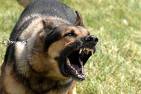
Friday, February 18, 2011

Stress and Calming Signals

When a dog yawns, I often hear a nearby person comment: "Oh, you're sleepy, poor little thing."  But, a difference between humans and dogs is that dogs do not yawn when they are sleepy.  When you see a dog yawning (especially, when s/he does a slight yawn with a shake of the head), it means the dog is under stress.  S/he is trying to relieve the stress by sending a calming signal.  Dogs sometimes send calming signals to relax themselves.  Other times, they will send such signals to other dogs or people to help them relax.

I tried this technique with a person who was causing me a lot of stress.  I looked away and kept yawning, hoping the person would read the ‘calming signals’ I was trying to get across.  It didn’t work… too bad!  She didn’t understand my intention at all and continued to make me stressed!  So, I gave up…

But, you can try to send this calming signal to a dog when you see that it is under stress.  I am sure it will work much better than the time I tried it on a human!

Like humans, dogs get stressed for many reasons.  When they get stressed out, it can have negative impacts on their health.  When their stress reaches at the maximum level or other parties don’t understand their signs, dogs sometimes express their stress by defending themselves and attacking others as a last resort.  But dogs always send signals before they take an action.  Unfortunately, so many times they take ‘the last resort’ action because humans don’t read or understand their signals.  And, that can lead to an unpleasant situation like a bite.  If we understand the signs of stress that dogs are sending, we can prevent such incidents.

Signs of Stress

Even though dogs are fairly adaptable to their environment, they still get stressed out by a sudden sense of dread, for example, or sudden changes in their environment.  Dogs are very sensitive to violence, anger, or aggression when they feel those things taking place in their surroundings.  In addition, dogs get stressed out if the environment is too noisy or people pay too much attention to them and don’t leave them alone.  But, at the same time, since they are a pack animal, they also get stressed when they are isolated too long.  Excessive exercise and play lead to stress, too.  Direct violence or anger from people or an attack from other dogs will very likely cause them stressed as well.

The following is a list of common stress signs:

Acting restlessly
Overreaction (to a doorbell, running into a dog on the street, etc.)
Scratching body, biting, chasing tail
Diarrhea
Allergies
Tense muscles
Shaking or trembling
Suddenly producing a lot of dandruff
Panting without exercising
Behaving aggressively
Barking, howling, whining
Fixation on certain things like light, shadow, noise, etc.
Loss of appetite
Urinating or defecating more frequently than usual

 
When you see a dog shaking his/her body as if s/he is "shaking off water," the dog is trying to shake off whatever caused him/her to stress.  It’s like a reset of the computer system.


A Relaxing Environment for Your Dog

As a dog owner, the most important thing for you is to read and understand the stress signals which your dog is sending.  Good communication and mutual understanding are the keys to a “stressless life” for you and your dog.  One of the things you can do for your dog is to pick a quiet spot in the house (i.e. a corner of the living room) and put a blanket down so that your dog can go there when s/he needs a downtime.  It is also a great idea to set up a crate at a quiet spot of the house.  Dogs are descendants of wolves.  They love their "cave" and use it like a den to retreat.  Once they recognize it as their personal space, they will start bringing their treasures like favorite toys, treats, etc.

Music can work as a great stress reliever, too.  Incidentally, classical music is played throughout the day here at my home since I started living with Juliette.  One of her favorite activities is to take a nap while listening to nice and relaxing music.  She sleeps very peacefully.  According to a study done by an animal rescue organization, the music of Mozart has the most calming effect on dogs.  And, dogs seem to feel most relaxed by the sound of the piano.  Nowadays, there is such an activity like DOGA (dog YOGA) where people and dogs can practice together to release their tension.  Why don’t you try to find some ways that both you and your dog can use for a stress reliever?

Well, I would like to talk about “exercise” in the next article.  As you know, exercise is one of the most helpful ways to relieve stress.  I hope to give you some important information on exercising for you and your dog.  Please look forward to it.

Until Next Time, Be Kind to Man’s Best Friends!

comments/questions: info@doggieproject.com


Tuesday, February 1, 2011

Pet Loss - Eternal Good-Bye To Your Pets

When I was walking Juliette this morning, Mary, one of our doggie lover neighbors, came to talk to me.  Her eyes were red and she seemed to be very depressed.  She told me that her beloved Bichon, Mimi, has just passed away.  Mimi suddenly started vomiting non-stop.  So, Mary brought her to the vet right away.  The tests indicated that Mimi’s colon was on the verge of bursting from colon cancer.  The vet sadly told her that there was nothing else they could do to save her at that point.  Mary didn’t want to see her dog suffering any longer.  So she decided to let Mimi go.  She said the first few days since she lost Mimi were so hard that she didn’t want to see anyone and kept to herself very quietly.  But, she finally started feeling a little better and wanted to tell people who knew Mimi of the news.  Yet, her voice started shaking while she was talking to me, and she ran back home.  Perhaps, seeing old Juliette might have reminded her of Mimi.
 
Emotional Preparation 

A dog’s life span is much shorter than ours.  Their average life span is 15 years.  The larger the body size of the dog, the shorter they tend to live.  The large breeds like Great Danes only live seven to eight years on average.  Yes.  It is very short indeed.  Most dogs grow from a ‘new born baby’ to a ‘teenager (in human age)’ in the first year of life.  Then, they age about 3-5 human years every year after that.  So, let’s say, even if you have a very young puppy right now, it is most likely that the puppy will surpass your age and depart this life before you. 

Since I live with a 13 year-old dog, I think I am prepared to deal with the reality that she will leave me pretty soon.  However, people around me seem to be very concerned about how I would become when Juliette departs from this world.  Coincidentally, I’ve recently came across some ‘timely’ info at the shelter.  It was a pamphlet from a facility that provides animal cremation and pet cemetery services.  Instead of thinking ‘that’s a bad jinx!’ I picked up one of them and am keeping it for … There are many places like the one I found and you can obtain the info by doing Internet research.  But, I am sure your vet can recommend a place you can rely on in case you need it.

When I lived in Japan, we had a family dog.  We named him Pluto after the Disney character.  When he became old, he suffered from Alzheimer disease.  He was always hungry and begging my mom to feed him 24/7.  He was about 17 or 18 years old when he found a way out of our house and wandered out.  He was barely able to walk.  But, he had that determination to ‘run away.’  He never came home.  When Pluto disappeared, my dad’s hearing ability suddenly deteriorated.  Although my dad was suffering from the condition for a while, it took a sharp turn downwards after Pluto’s disappearance.  The shock of losing Pluto was quite real – for all of us.  And you may not realize the magnitude of perpetual presence of your dog until s/he is gone.  

People who say “I don’t think I want to have another dog ever again” when their beloved dog passes away often seek another dog eventually.  It seems almost impossible for dog lovers to have a life without a dog.  Some people come to seek a new dog at the shelter on the same day or the next day of their dog’s passing.  Others take a long process to move on.  I believe it is totally up to each person to decide when to seek another dog.  However, it may not be wise to look for a ‘replacement’ when you are not totally over with the process of mourning.  Not only would it be difficult for you to properly establish a relationship with your new dog, it wouldn’t be fair for the new dog if you are not emotionally ready to move on and have a fresh start. 

The Rainbow Bridge

In the U.S., there is a belief that animals go to ‘Rainbow  Bridge’ when they die.  When they cross Rainbow Bridge, they see an enormous field of beautiful green grass.  All the animals play happily by chasing one another.  All of them get along.  It is a paradise full of food, water, and bright sunshine.  It is said that the animals are watching over us from there. And, since I love dogs so much, I wonder if I could go there when I depart from this world.  I hope so. 

Well, like humans, dogs can also feel stressed for many reasons.  I would like to talk about stress signs in dogs and what dog owners can do to help them ease their stress.

Until next time, Be Kind to Man’s Best Friends!


comments/questions: info@doggieproject.com


Monday, January 17, 2011

Life with an Older Dog

Juliette’s ‘Funny’ Behavior
 
"Is she really 13 years old?  She looks like she is only 5-6 years old!"  Juliette seems to twinkle whenever people compliment how young she looks.  However, she definitely has started showing the signs of aging, especially since the beginning of 2010.  I often find her standing at a corner of a room facing towards the wall.  She usually stays standing in that position for quite a while or until I ‘wake her up.’  When she is at ‘her corners,’ she seems to be in her own world.  If she isn’t ‘lost at her corners,’ she keeps pacing around the apartment.  She goes back and forth… back and forth… The sound of her nails tapping on the hardwood floor echoes throughout the apartment, and it can be irritating if one tunes into it.  Some other ‘funny’ behavior she started doing is an ‘obstacle race.’  She tries to get herself through the legs of a chair or table.  But since she is not as agile as she used to be, she often gets stuck under a chair and panics.  And, these symptoms are progressing rapidly.

I have been talking to people who live with senior dogs and have learned that they have experienced very similar ordeals.  From reading and doing internet research, I’ve found out that these are the typical symptoms of dementia in senior dogs.  Excessive pacing is a very common sign of dementia in dogs – the loss of ‘purposeful activity.’  When dogs get older, they lose the ability to back up.  That’s why Juliette gets panicky when she gets stuck at a corner of a room or under the chair.  These behaviors are all part of Cognitive Dysfunction Syndrome.

Signs of Aging and Owner's Support

Although it depends on breed and body size, dogs start showing signs of aging around the age of 7.  Gray hair on the face may be the first sign that most dog owners notice.  Juliette’s eyelashes have all turned white now.  You might notice that your dog starts having trouble with getting up on places where s/he used to jump up without any problem.  S/he might start acting more dull or her/his reactions become slower.  Then, you may begin to accept that your dog is aging.

About two years ago, when I came home from work, I found Juliette trembling on the bed.  She didn’t want to get off the bed to greet me, either.  I started thinking she may have fallen off the bed while I was gone and injured her back.  I thought I might have to run her to emergency.  But, she had a very good appetite and finished her favorite treats in a flash, so I waited until the next day to take her to the vet.  After a few tests and x-rays, she was diagnosed with Arthritis.  The vet prescribed some pain relief medications and supplements.  But, I was reluctant to rely on the medication too much.  Some research revealed Yucca (potato from South America) helps to ease joint pain and inflammation.  So, I started adding steamed Yucca to her daily meals.

It seems unbelievable that until a few years ago she was walking so energetically and powerfully that she often made me sweat.  Now, we only totter around the block of our neighborhood.  I have set up doggie steps next to the bed for her to be able to go up easily.  Because she is losing the ability to keep balance and sometimes falls off the bed, I place soft cushions around the bed just in case.  Yes.  I have recently become a ‘caregiver’ for an aging dog.
 
Fortunately, Juliette doesn’t show any signs of the more serious diseases of old age.  Cataracts and dental diseases are very common in older dogs.  Kidney disease, frequent urination and diabetes are also common problems associated with aging.  Because the dog is a very pain-tolerable animal, you may not notice how much trouble your dog is in until the symptoms are far along.  So it is your responsibility as the owner to observe your older dog more carefully and listen to the ‘words’ your dog is telling you.  If you notice these kinds of changes, take the appropriate action as quickly as possible.  Your senior dog may also be feeling surprised by lots of changes in her/him.  The best medicine for an older dog is love and support from the owner.  Give him/her a massage or a hug every day.  Also please keep ‘conversing’ with your dog the same as always.

For me, the way I see it, Juliette and I have been through everything together like ‘collective souls.’  I believe it’s my duty to provide my lifelong partner a happy, fun, and meaningful life until she departs from this world. 

Well, next time, I would like to talk about ‘pet loss.’  Even though it is a difficult subject to undertake, I believe it is important for all dog owners to be prepared and be objective about it.

Until next time, Be Kind to Man’s Best Friends!


comments/questions: info@doggieproject.com

Wednesday, January 5, 2011

Training

"Sit." "Come." "Down."  These are some of the commands used in dog obedience training.  Training is one of the most essential responsibilities a dog owner should take on.  Not only will you and your dog learn commands and tricks, but you can also build a stronger bond with your dog in the process.  And, that helps you to establish a leadership role position as a dog owner.  As I mentioned in the previous ‘Leadership’ article, it is inevitable for a dog owner to know how to practice leadership exercise with your dog.  If you don’t practice leadership well, your dog will try to be the leader of the pack because s/he feels the strong leader is a must to have in a pack.  When your dog tries to become a leader of the pack, s/he will start displaying several unwanted behavior.  That is why you must learn to feel comfortable being a strong leader for your dog even though acting assertive or using low-tone voice commands are not natural to your personality.  Believe it or not, your dog needs to feel that you are ‘master and commander’ in the home in order for him/her to feel secure and relaxed.  Training will also give your dog great mental stimulation which benefits your dog’s well-being when you incorporate training activities into your dog’s daily life. This mental stimulation can be more vital than vigorous physical exercise. 

Different Types of Training

There are various types of dog training.  Allow me to introduce some of the common training programs:
 
1) Puppy Kindergarten:  puppies learn basic manners and build social skills by playing with other puppies.  Puppies from about 8 weeks old can attend this type of class.

2) Obedience Class: it usually runs 6-8 weeks.  Dogs and their owners learn basic commands like "Sit." "Stay." "Down." and "Heel."  This class is a great tool to establish a stronger bond between dogs and their owners.

3) Agility Class: you and your dog learn to clear obstacles.  There are competitions where dogs and their owners can run an obstacle course together.  This type of activity can stimulate dogs both mentally and physically.  Dogs can also boost their confidence. (for more info: dog agility


4) Special Service Dog Training: there are special training programs to become service dogs such as guide dogs (for more info: guide dogs), search and rescue dogs (for more info: rescue dogs, guard dogs and drug/bomb detective dogs, etc. (for more info: police dogs)


Group Class vs. Private Lesson

"Which lesson do you recommend, private lessons or group class?"  There are pros and cons for both methods.  Private lessons are, of course, more expensive.  However, you can get 100% attention from your trainer in a private lesson whereas your trainer’s attention will be spread out in a group class.  In this sense, the cost for a private lesson might not be so expensive after all if you would like 100% of a trainer’s guidance.  In a group class, you may be able to learn a lot from other students who have similar problems and you can encourage one another.  However, if your dog doesn’t get along with other dogs, I strongly recommend that you take a private lesson. The trainer and your classmates may not be able to concentrate on the drills if your dog gets agitated and can’t calm down around other dogs.  Also, you and your dog won’t be able to learn anything under such a circumstance.  You may feel embarrassed and get home exhausted mentally and physically.  This is why you are better off with private lessons if your dog doesn’t get along with other dogs.


The Most Important Thing is to Have Fun!

Don’t forget to give your dog an opportunity to feel ‘success’ in a session.  When your dog knows s/he did something right, not only they feel happy, that also leads to confidence.  Your dog will start to understand a joy of learning.  Also, please remember that your dog is watching every move you make during the training sessions.  This can be a golden opportunity for you to become a leader.  Don’t get panicky, don’t get too emotional.  By leading your dog in a calm and dignified manner, your dog will start to trust and respect you more.  This is a great way to establish ‘owner – dog’ leadership roles.  However, the most important element of training is to have fun with your dog.  Don’t make wrinkles between your eyebrows.  Don’t yell at your dog just because s/he is not getting a command quickly enough.  Remember to smile and enjoy the whole experience; your dog will, too.  So, won’t you consider taking classes with your dog?  It will be fun!


Well, next time, I would like to talk about ‘life with an aging dog.’   It will be a little sentimental and a personal article since I am living that life.  Please look forward to it. 

Until next time, Be Kind to Man’s Best Friends! 


comments/questions: info@doggieproject.com

Friday, December 17, 2010

What is Leadership as a Dog Owner?

Imagine being shipwrecked on a desert island.  Until rescuers come to help, we somehow have to survive on the island on our own.  If you were in such a situation, what kind of person would you follow in order to stay alive?  Probably, no one would feel good about following someone who is nervous, upset or goes into intense emotional ups and downs.  Likewise, someone who acts as a loner or behaves selfishly would lot get much cooperation from others.  No matter what crisis they need to overcome, I think most people would agree that they would seek a leader with tremendous courage who possess enormous physical energy to stay alive and radiates a well-balanced mental state to make the right decisions and come up with good ideas that might help everyone survive.  Do you agree?

Guess what?  This is the characteristic your dog is looking for in his/her leader.

A couple of important points to remember about dogs: 

 1) dogs are pack animals
 2) dogs live in a hierarchical society


When a dog becomes part of a pack, s/he tries to find his/her position in it.  If a great pack leader is already there, the dog will show submission to its leader.  If s/he can’t recognize a powerful or respectful leader in the pack, then the dog will try to take over the role itself.  This is because dogs have a survival instinct in which they recognize the need for a superior pack leader.

When there is NO human leader

This same principle applies in modern living circumstances in a condominium, apartment or house with a dog.  When a dog doesn’t trust the master's leadership position in the home, it tries to become a pack leader — even if the only other members in the environment are human.  Thus, the human owner will notice their dog displaying unwanted behaviors, such as:

  1. barking fiercely towards “outsiders” who come close to its territory 
  2. challenging other dogs during walks
  3. pulling the owner (on the leash) while they are out for a walk, and insisting on roaming everywhere it wants to go
  4. challenging or snapping at anyone who comes close while eating
  5. ignoring the owner(s) when called 
  6. challenging the owner(s) when told to be “off” from couch, bed, etc.
At the same time the dog tries to protect its pack, it also tries to display its superiority to its followers.  However, dogs should not be in the role of pack leader when they live with humans!  Humans must ALWAYS assume the role of pack leader so our dog(s) can naturally and smoothly become the follower(s).  It is absolutely necessary that the humans provide this leadership role so their dogs can relax and take the ‘follower position’ in the ‘pack.’  Otherwise, there will never be a hierarchy that both dog and master can fit into comfortably and rely on.

Rules, Boundaries, and Limitations
 
Are you babying your dog too much?  Are you leaving your dog alone too long because of your busy schedule?  Are you letting your dog do whatever s/he wants because you believe dogs are entitled to have lots of freedom?  If any of the above apply to you, you are not providing proper leadership for your dog.  My ‘mentor’ Cesar Millan (a.k.a. Dog Whisperer) always says, "Rules, Boundaries, and Limitations.

Dogs need structure in order to feel secure.  When they understand the rules and what is to be expected, they can relax.  On the other hand, if dogs feel they need to take over the leadership role, they often show signs of stress because of a variety of responsibilities and obligations that they feel ‘need to be done’ for the pack.  This can also become harmful to your dog and lead to health risks. Thus, in order for dogs to feel secure and relaxed, we humans need to do our best to position our leadership roles clearly to gain trust and respect from our dogs.  By doing so, we provide our dogs a peaceful way of life.

Well, next time, I would like to talk about one of the most important responsibilities for us as leaders — training. We will consider what the most important aspect of training is with our dogs.

Until next time, be kind to Man’s Best Friends!

comments/questions: info@doggieproject.com

Friday, December 3, 2010

Spay/Neuter

“If we want to end the pitiful situation of abandoned, homeless dogs from this planet, the best solution is to spay and neuter all dogs!”  I’ve once heard a celebrity speak out on this so passionately.  Although we see more and more dog owners having their dogs altered these days, there is still persistent resistance towards spaying and neutering pet dogs.  It has become my regular ‘sermon’ at the shelter or wherever else I go - to explain the benefits of it and to encourage dog-owners-to-be to spay or neuter their dogs. 
There are pros and cons in regards to the question of spaying/neutering (S/N) dogs and there is no right answer to it.  However, I personally believe that having your dogs spayed/neutered produces more benefits than demerits, and I am hoping everyone realizes the importance of it.  In this article, I want to explain why I keep being so outspoken about this issue and tell people, “if you love your dog, trust me and please just spay/neuter.”

The most common reason for resistance to getting the S/N procedure done seems to do with people’s feelings about manhood.  If the owner is a rather macho individual, this sentiment becomes stronger.  I often hear, “if we take the balls out of my boy, he won’t be ‘a man’ anymore,” or “his personality will change drastically.”  Owners of female dogs seem to be more concerned about safety of the surgery or overall health concerns.  They don’t think it’s necessary to ‘cut her up’ if there is no foreseeable possibility in the future for their female dog to mate.  Why bother?  It is perfectly understandable to worry about surgery.  In fact, when my dog Juliette had her spay surgery, she almost didn’t wake up from the anesthesia!  However, this was a very rare case.  It would be much riskier if your dog needs to undergo surgery at an old age because s/he developed a disease in the reproductive organs which could have been taken out in S/N surgery.  Yes.  Prevention of unnecessary illness in later years is one of the best benefits of S/N procedure. 


Female dogs who are not spayed have their cycle twice a year and they go into heat.  The pheromones that those females emit during their cycle are aerated for miles around, and especially the park down the street where they leave their scent while walking the neighborhood.  That scent attracts their neighboring un-neutered male dogs.   Then, it makes the male dogs feel the need to pro create! However, most pet dogs do not have access to mate even if the time has arrived.  If the male dogs do not get the opportunity to meet a female, their frustration could reach the boiling point – or even to explode.  Some try to run away.  Others become aggressive or display behavior problems.  So, un-neutered male dogs have to go through this torture twice a year for many many years until they die.  By having him neutered, you can prevent ‘runaways.’  Your dog should behave milder since no testosterone will be produced (testosterone can make dogs more dominant and aggressive).  Thus, it is a tremendous benefit for both male and female dogs to be free from the frustration caused by sexual urges.
 
"Let’s have one litter and then we will spay her" or "it was an unexpected pregnancy…."  I hear these stories often.  Well, do you think all the puppies from the litter will find a permanent home?  The answer is no.   The puppies may be lucky enough to find a home - eventually.  But, there is a pretty big chance that some of the ‘grandpuppies’ would end up at a shelter.  Additionally, the family who adopted from your litter could have adopted a dog from a shelter!  The family could have saved a life of a homeless dog!  At the shelter where I work, all the dogs who find a home are spayed/neutered before they leave unless there is a compelling reason not do the procedure - the probability of which is about one in a million. 

Since we took the wildness from dogs, I truly believe that it is our duty to spay/neuter them to diminish excessive breeding and to lower the numbers of homeless dogs in this world.  That is why I constantly keep repeating, "Please just believe me and spay/neuter your dog if you love him/her so dearly."


Well, next time, I would like to bring up one of the most important topics for dog owners - “leadership.”  

Until next time, be kind to Man’s Best Friends!


comments/questions: info@doggieproject.com


Tuesday, November 16, 2010

Matchmaking!: part 2

Nicole's German Shepherd Dog

Nicole lives with a German Shepherd in a small Manhattan apartment. Every time someone passes through the hallway or the elevator goes back and forth, her German shepherd barks fiercely.  Since the dog also barks viciously and shows his teeth whenever delivery people come to the door, they started refusing service.  Her neighbors also started complaining... Nicole feels nervous when she leaves the dog alone in the apartment.  So, she goes out less and less.  Her friends stopped visiting  which makes her feel very isolated.  However, the dog is extremely loyal to her and trying his best to protect what he loves most.  She also thinks she is the only one who can protect him.  Nicole started becoming neurotic because of this intense situation.

Do you think I am exaggerating?  Though the situation or breed of dog might be different, I’ve heard similar stories over and over when I talk to the dog owners who come to the shelter to surrender their dog or when I receive a phone call for training consultation.   

Guard Dogs

Dogs like German Shepherds, Rottweilers, Mastiffs, Dobermans, Chow Chows, etc. are bred to guard and protect.  If their owners don’t demonstrate strong leadership, these breeds will go overboard to protect their family or property from outsiders.  In other words, they will try their best to fulfill their mission.  They have no idea they are only giving their owners trouble.  So, if you live with a breed that is considered to be a guard dog, you are required to have considerable energy and firm leadership skills as a dog owner of such a powerful breed.


Dog-to-Dog Aggression
 
Pitbulls are generally very friendly to humans and enjoy interactions with them.  They can be friendly instantly even with a stranger.  However, many pitbulls tend to show dog-to-dog aggression.  This is because pitbulls were created for dog fighting sport by people in England centuries ago and some of them were purposely bred to be aggressive towards their own kind.


Howlers and Pokers

Beagles and Basset hounds howl excessively when they get excited.  This is a typical characteristic of hunting breeds.  They warn their owners by howling very loudly and proudly.  They won’t stop until the owner reacts to it.  Their loud and deep voice that comes from the depths of their soul can irritate anyone rather easily.  You might get a considerable number of complaints from your neighbors if you live in a tight-knit community.  And in such close quarters, beagles seem to be an ideal size for apartment living, but I often advise people who live in an apartment to think again about adopting a beagle due to their howling habit.

Australian Shepherds, Border Collies and Corgis often poke heels of people with their snout.  They may nip lightly as well.  This can frighten small children in the household, or neighbor kids who come to play.  Yet for these breeds, this is their ‘herding activity.’  They are working hard to gather ‘livestock’ by poking or nipping its back or heel. 

Man-Made Creations

What the examples above tell us about certain types of dogs is that they are man-made creations.  Over the years, people have created many different breeds in order to utilize their particular behavior for every aspect of our lives.  Therefore, it is very important for us to study the breed before we choose our new dog.  We should be aware of the origin of the breed and special characteristics to see if it matches our lifestyle.  Many well-organized animal shelters are equipped with adoption counselors who can help lead you to the right dog.  So, please ask for expert’s guidance when it comes to selecting the right breed for you.  Moreover, you might be able to figure out some peculiar behavior your dog displays if you study his/her breed in depth.  You might be able to take advantage of those traits for something very useful!

Well, I would like to talk about pros and cons of spaying and neutering dogs in the next issue.  Please look forward to the discussion.

Until next time, be kind to Man’s Best Friends!


comments/questions: info@doggieproject.com